Air Operations, Carolines
During the night, 11th Heavy Bomb Group B-24s based in the Marshall Islands attack the Truk Atoll.
[
 |
| 
 ]
]Air Operations, Central Pacific
During the night, VII Bomber Command B-24s based at Kwajalein stage through Eniwetok to attack Wake Island.
[ | ]Air Operations, CBI
BURMA- 13 10th Air Force P-47s attack Haungton, Mawlu, and Myintha.
- 11 308th Heavy Bomb Group B-24s attack Nanking.
- 12 341st Medium Bomb Group B-25s attack barracks at Mangshih.
- 12 B-25s attack Kweiyang.
- 6 B-25s attack the town area and rail facilities at Hengyang.
- 14th Air Force P-51s and P-40s mount nearly 120 effective sorties against numerous targets across broad areas south of the Yangtze River.
- 15 7th Heavy Bomb Group B-24s transport fuel from India to Kunming, 1 B-24 transports fuel to Liuchow and 1 B-24 transports fuel to Yungning.
| ]Air Operations, East Indies
- FEAF B-24s attack the Kendari airfield on Celebes and the Namlea airfield on Boeroe.
- B-25s attack the Langoan airfield on Celebes.
- V Bomber Command A-20s attack stores and bivouac areas at Kaoe Bay.
- FEAF P-38s attack Boela and Kairatoe.
| ]Air Operations, Europe
RAF BOMBER COMMANDDaylight Ops:
- 872 aircraft including 430 Lancasters, 397 Halifaxes and 45 Mosquitos are again sent to bomb defensive positions at Calais. Low cloud is again encountered and only 287 aircraft drop their bombs.
- There are no losses.
- 70 Halifaxes of No. 4 Group start a series of flights to carry petrol in jerricans from England to airfields in Belgium, in order to alleviate the severe fuel shortage being experienced by Allied ground forces. No. 4 Group will fly 435 such sorties during an 8-day period. Each Halifax carries about 165 jerricans, approximately 750 gallons of fuel, on each flight. The total amount of fuel carried during the period is approximately 325,000 gallons, about the same amount of fuel that the Halifaxes themselves consume.
- No aircraft are lost during these operations.
- 5 Hudsons are on Resistance operations and there are 4 RCM sorties.
Minor Ops:
- 48 Mosquitos are sent to Mannheim and 4 to a chemical factory at Höchst, just west of Frankfurt, and there are 30 Mosquito patrols and 3 RCM sorties.
- 1 Mosquito is lost on the Mannheim raid.
FRANCE:
- Nearly 125 8th Air Force B-24s transport fuel to France.
- 410 1st Bomb Division B-17s attack industrial targets in and around Frankfurt am Main.
- 257 2nd Bomb Division B-24s attack two marshalling yards at Koblenz
- 300 3rd Bomb Division B-17s attack a marshalling yard and an oil-industry target at Ludwigshafen.
- 2 B-17s are lost
GERMANY:
- IX TAC fighters and fighter-bombers support US 1st Army and dive-bomb rail lines in western Germany.
ITALY:
- XII Fighter Command fighter-bombers are able to provide direct support for the US 5th Army and attack rail and road targets and barracks.
- During the night, XII Fighter Command A-20s attack targets of opportunity in the Po River valley.
GREECE:
- 51 15th Air Force B-24s attack harbor facilities at Piraeus, Salamis, and Skarmanga.
| ]Air Operations, New Guinea
- V Bomber Command B-25s and A-20s attack the airfields at Sagan and Urarom.
- V Fighter Command P-40s attack Kaimana.
| ]Air Operations, Volcano Islands
30th Heavy Bomb Group B-24s based at Saipan attack Iwo Jima.
[ | ]Atlantic
The US minelayer Miantonomah (CM-10) is lost in the Normandy area when it hits a mine.
[ | ]CBI
CHINAAfter so much hesitation, and stung by Roosevelt's candid message, Chiang Kai-shek refuses to entrust the operational command of the Chinese Nationalist army to Gen Joseph Stilwell.
[ | ]Eastern Front
In Estonia the Baltic port of Haapsalu falls to the Russians. In Yugoslavia the Partisan forces take Banja Luka.
NORTHERN SECTORHaapsalu falls to the 8th Army. The Germans take around 11,500 men across the straits to the Moonzund Islands.
SOUTHERN SECTORTito's partisans capture Banja Luka.
[ | ]Germany, Home Front
The Allies exhort an estimated 12 million foreign worders and slave laborers in Germany to rise against their tormentors.
Hitler formst the Volkssturm (home guard) to operate under the Nazi Party rather than the military. Himmler and Bormann are to oversee the organization.
Hitler orders the formation of the Volkssturm ('People's Militia') to defend Germany. Men up to 65 are pressed into the last-ditch defense force.
[ | ]Italy
Although forced back to the north by the massive, unrelenting Allied offensive, the German units of Joachim Lemelsen's 14th Army and Heinrich von Vietinghoff's 10th Army continue to fight back determinedly against the American divisions of Gen Mark Clark, on the west of the front, and Oliver Leese's British divisions in the east. But the position of von Vietinghoff's divisions is becoming more and more critical. He has now no more than 90 battalions of infantry, only 10 of which are more than 400 strong, while at least 38 of them can only deploy some 200 men.
In the US 5th Army's IV Corps area, TF 92 (Brig-Gen John S. Wood, 92nd Division ADC), consisting of the 370th Infantry of the 92nd Division and CCB of the 1st Armored Division, takes command of a zone previously held by the 1st Armored Division. Elements of the South African 6th Armored Division move to Monte Casciaio, west of Monte Coroncina, and relieve the 34th Cavalry Reconnaissance Troop of the task of screening the left flank of the II Corps.
In the II Corps area, the 34th Division progresses slowly toward Monte Bastione on the left flank of the corps. The 91st Division takes Monte Beni, below Monte Oggioli, on the right but makes little progress on the left under fire from Monte Bastione. The 338th Infantry, 85th Division, attempts to outflank the enemy on Monte Canda by attacking first toward Torre Poggioli to the northeast, but is unable to gain this objective. The 3rd Battalion, 339th Infantry, tries to assist on Torre Poggioli but is stopped by opposition from Montarello. The boundary between the 85th and 88th Divisions is altered in preparation for a strong effort by the 88th Division on the 26th to break through the last heights before Imola. The 337th Infantry of the 85th Division takes responsibility for Monte la Fine, releasing the 349th Infantry of the 88th Division.
The British XIII Corps battles for heights commanding Palazzuolo, Marradi, and San Benedetto. Several attempts by the 1st Division to take Monte Gamberaldi fail. The Indian 8th Division begins an attack on Monte di Castelnuovo, where the Germans resist strongly. The 6th Armored Division, previously ordered to the 8th Army front, is directed to remain in place and and contain the enemy on the right flank of the corps.
In the British 8th Army's V Corps area, the Indian 4th Division is delayed in crossing the Uso on the left flank of the corps by fire from Cornacchiara on the far bank, but the Germans withdraw during the night. The 46th Division expands its Uso bridgehead toward Canonica. The 1st Armored Division, after establishing a bridgehead across the Uso at San Arcangelo and Highway 9, is relieved there by the 56th Division.
In the Canadian I Corps area, the 5th Armored Division secures a bridgehead across the Uso.
[ | ]New Guinea
Lt-Gen Walter Krueger's Alamo Force is redesignated at US 6th Army. The Alamo Force's accomplishments in the New Guinea campaign are impressive. Krueger and his staff have orchestrated and brought to reality Gen MacArthur's vision, conducting simultaneous and sequential operations effectively coordinating land, air, and naval power in a combination intended to place the Japanese at a disadvantage. American forces have fought a determined enemy who had little choice but to fight and die honorably. The jungles and islands of New Guinea have some of the most forbidding and inhospitable terraine in the world, and yet Americans have defeated the Japanese, recognized experts in this warfare, and then carved, blasted, and dug pathways into the jungle for airfields, depots, and ports that ultimately overwhelmed the enemy and opened the way to the Philippines.
6th Army is composed of two corps, I Corps, commanded by Maj-Gen Innis P. Swift, and X Corps, commanded by Maj-Gen Edwin D. Patrick. Gen MacArthur also establishes the US 8th Army, commanded by Lt-Gen Robert L. Eichelberger.
[ | ]Pacific
- The US submarine Barbel (SS-316) sinks the Japanese merchant cargo ship Bushu Maru (1222t) off Togara Gunto.
- The US submarine Guardfish (SS-217) sinks the Japanese merchant cargo ship No.2 Miyakawa Maru (873t) in the Yellow Sea off Chinnampo, Korea.
- The US submarine Searaven (SS-196) attacks Japanese small craft off the southwest tip pf Etorofu, Kurils, sinking No.1 Hirota Maru.
- The US submarine Thresher (SS-200) sinks the Japanese merchant cargo ship Nissei Maru (1468t) in the Yellow Sea.
| ]Palaus
PELELIUThe 7th Marines and 321st Inf attack on the left flank to dislodge the Japanese from the northwest part of the island. The 5th Marines also attack along the coast on the right flank. The Americans make some gains in the north of Peleliu on Mount Amiangal after attacks employing tanks and flame throwers.
ANGAURFinding that their raids and their shelling are equally ineffective in the Lake Salome area, the 322nd Infantry and the engineers begin to build a road so that they can get at the enemy pocket from the northeast.
[ | ]Western Front
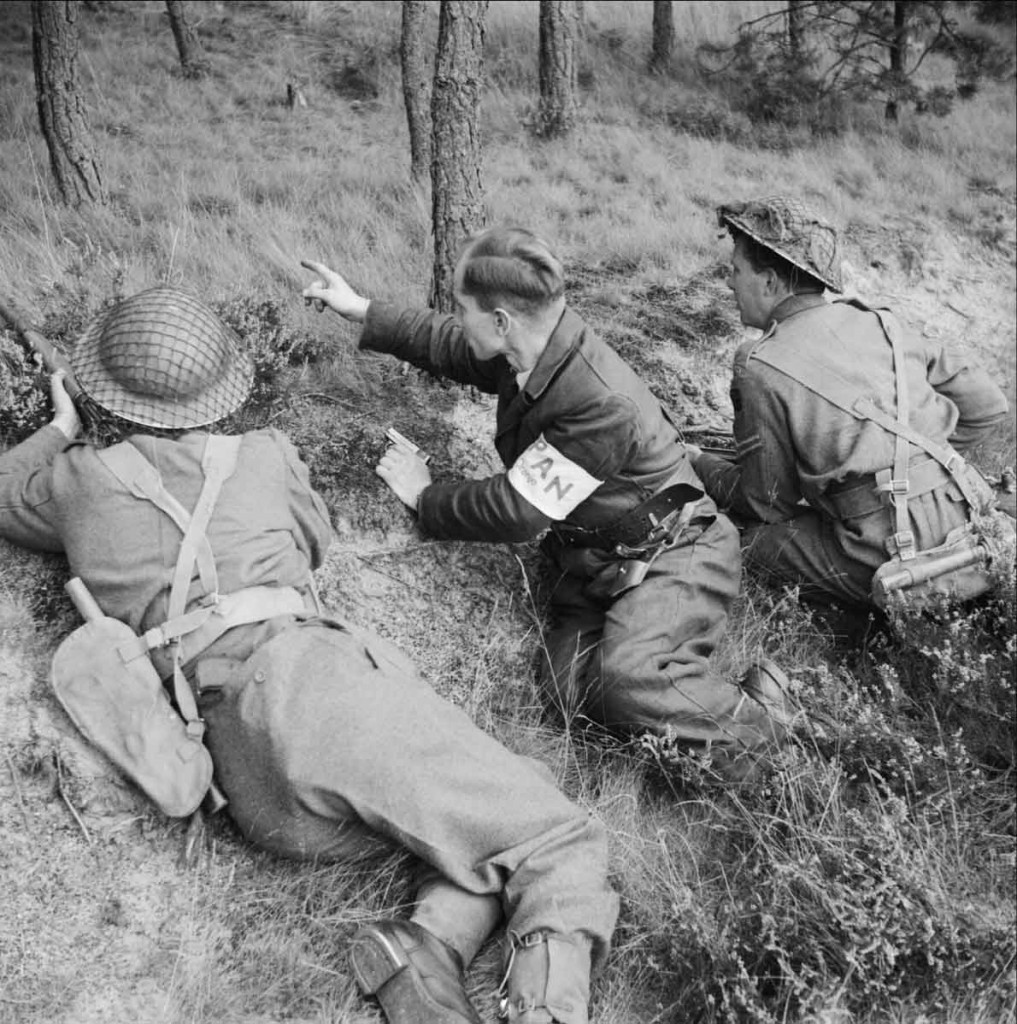
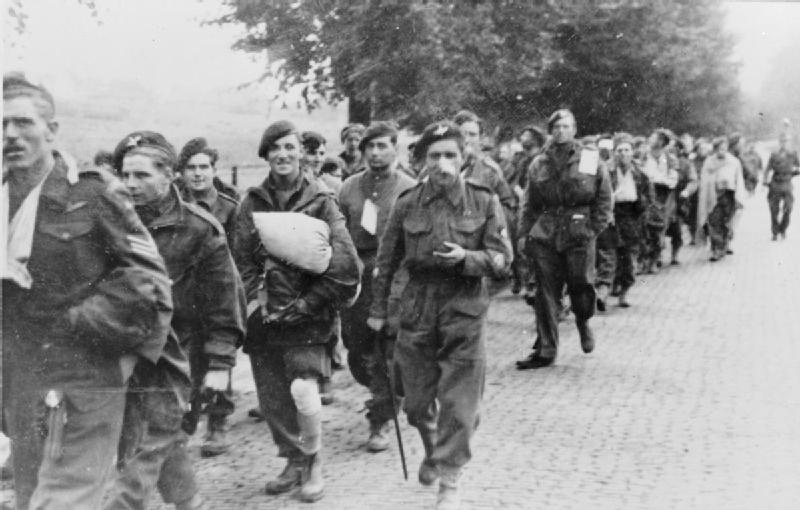
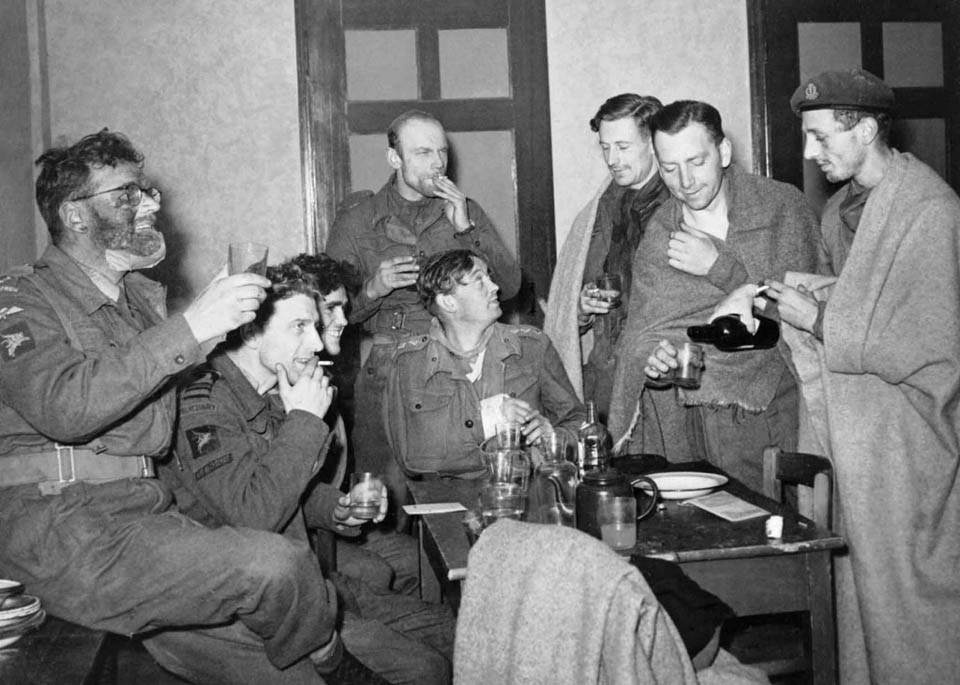
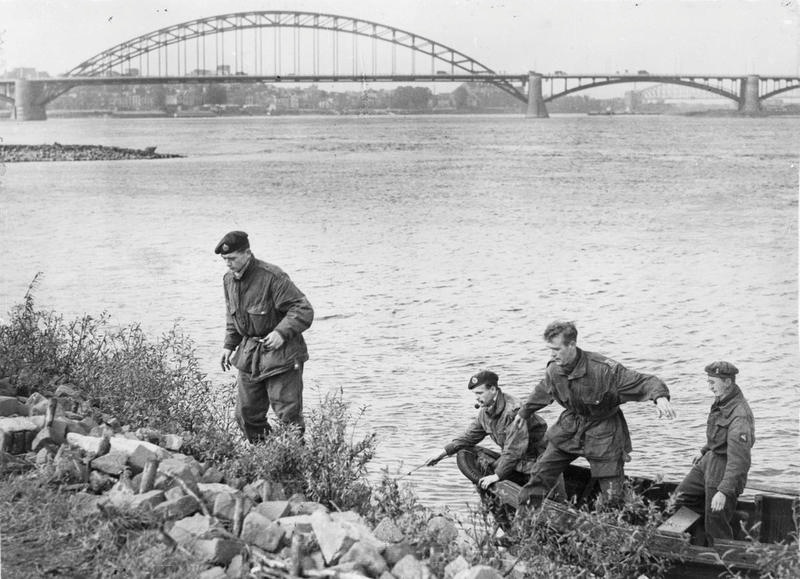
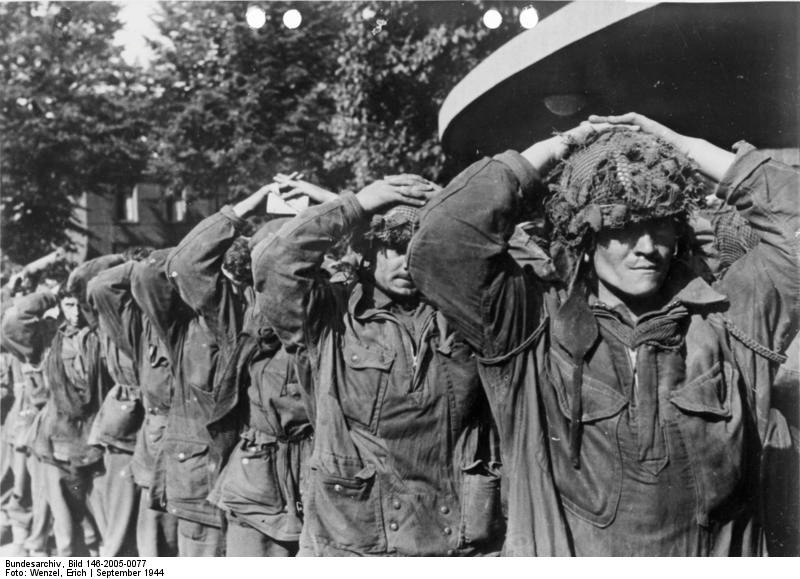
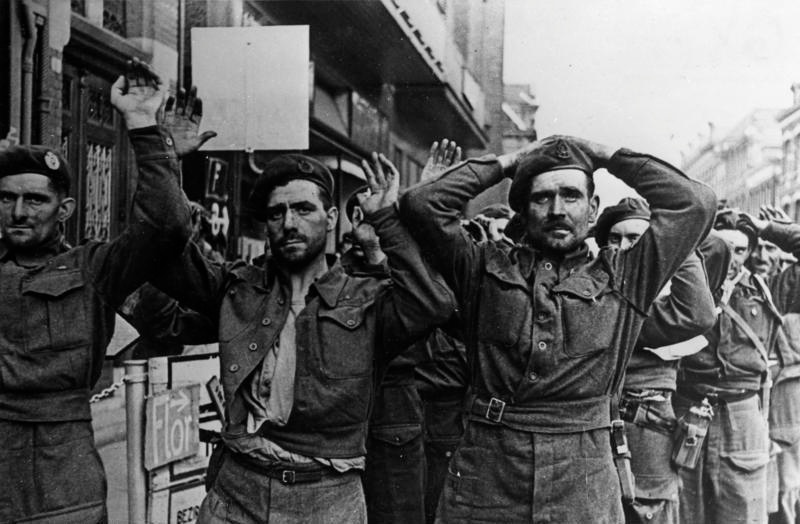
Troops from British 2nd Army take Helmond and Deurne only a few miles east of Eindhoven. This illustrates well on how narrow a front XXX Corps has been compelled to advance to Arnhem. It is decided to evacuate as many as possible of the surviving Arnhem paratroops across the Rhine in small boats. During the night 2,400 of the 10,000 who landed get away. About 1,100 have been killed and 6,400 are taken prisoner. Some few more are sheltered by Dutch families until the Allies advance again despite dreadful food shortages and the terrible danger of discovery.
On the Channel coast after an intense artillery bombardment the Canadian 3rd Div attacks Calais where the German garrison still holds out.[WE]
The Allied landings in the south of France which are still continuing have now contributed 324,000 men to the AEF along with 68,000 vehicles and 490,000 tons of supplies. Much of the supplies for the southern armies along the German border are still coming through Marseilles.
[ | ]Images from September 25, 1944
|
|
|
|
|
|
|
|