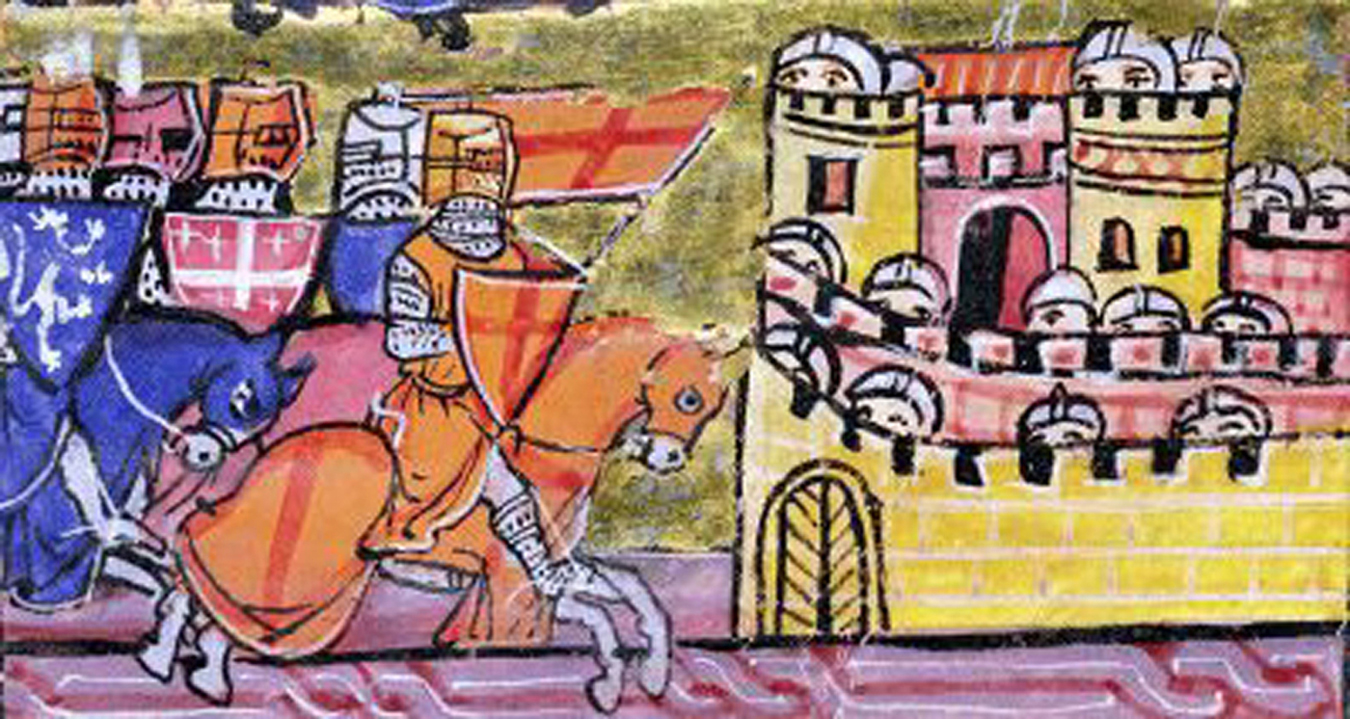
The disastrous crusade
On Christmas Eve 1144 the city of Edessa, capital of the first crusader state founded in 1098, was captured by Zengi, the Muslim ruler of the Islamic princedoms, Mosul and Aleppo, and the most dangerous enemy the Christians had yet faced. In response the pope proclaimed the Second Crusade, led by Louis VII and the German emperor, Conrad III. Louis had planned his own armed pilgrimage before he heard of the fall of Edessa -- not least because he needed to restore his reputation following a series of setbacks in France.
The crusade was a dèbâcle: the crusaders skirmished with the Christian inhabitants of the Byzantine Empire as they travelled to the East; both armies were heavily defeated by the Turks as they crossed Asia Minor; and the attempt to capture the rich prize and strategically vital city of Damascus ended in fiaco.
For Louis there were deeper problems: the conduct of his headstrong wife Elanor, who had accompanied him, was tainted with scandal. At Antioch she and Prince Raymond, her uncle, tried to persuade Louis to commit his army there, while he was eager to fulfill is oath by visiting Jerusalem. Worse, lewd rumours began to circulate that the affection between Raymond and Eleanor went beyond what was natural for uncle and niece. Louis believed them, and it was said that he had to drag his wife away by force. The affair dealt a disastrous blow to their marriage which was finally annulled in 1151, when Louis lost both his wife and her duchy of Aquitaine.
|