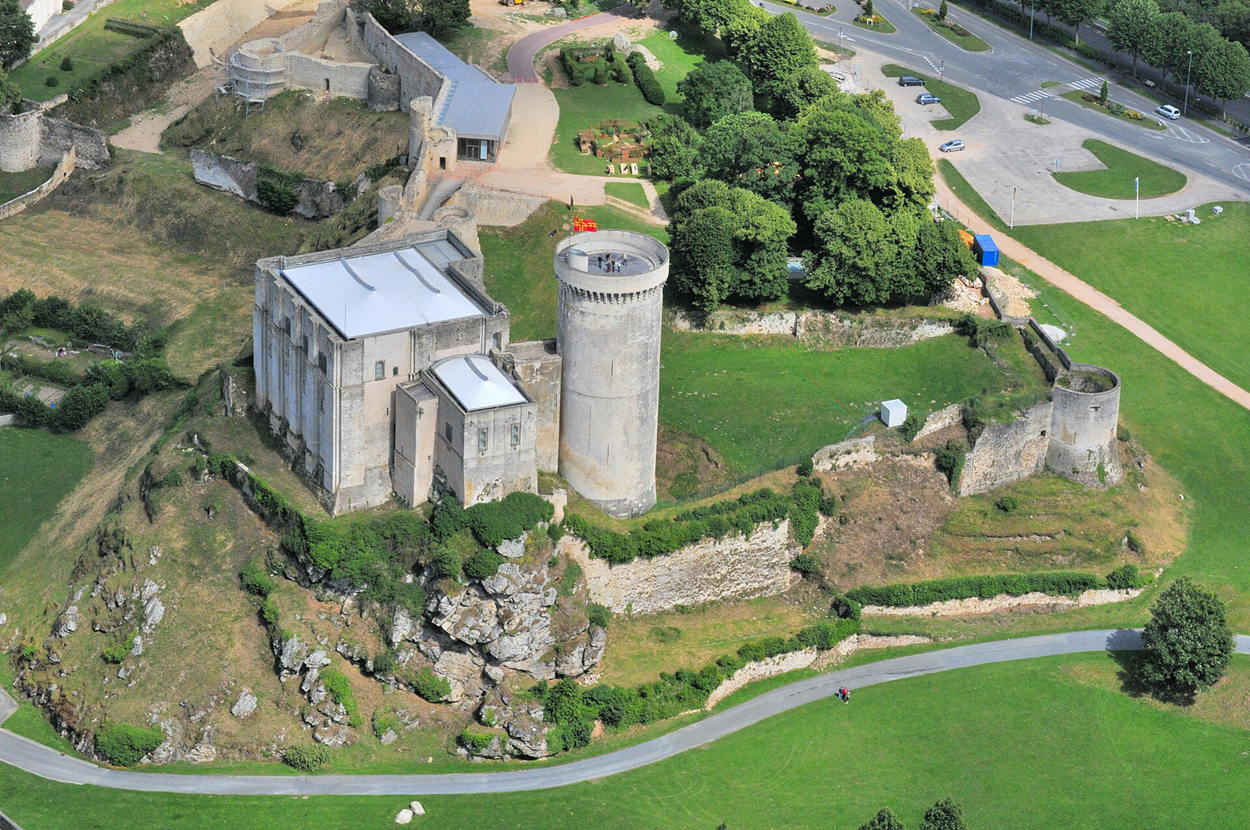
The first Plantagenet conquest
The conquest of Normandy by Geoffrey Plantagenet, count of Anjou, wasl almost completed in 1144. It was a culminationof nine years of conflict, in which he and his wife the Empress Matilda tried to make good her claim to rule England and Normandy. IN 1135, after Henry I's death, Stephen of Blois had take both, buth the Angevins now had a secure base from which to snipe at his power in England.
Intially, four expeditions into Normandy between 1135 and 1138 had achieved little. In 1137 the Angevin army had been smitten with dysentery and, in a contemporary's words, ran out of the duchy leaving behind a trail of filth.
Normandy was tied to England mainly because so many of the nobles held lands on both sides of the Channel. Stephen made little effort to gain Norman loyalties -- indeed he only visited the duchy once. But the Normans so hated their traditional enemies, the Angevins, that they
put up stiff resistance to Geoffrey's troops. However, the news of Stephen's capture at Lincoln in 1141 by Matilda's followers undermined morale in Normandy. Castle after castle surrendered in rapid succession. In 1141 Geoffrey held most of the lands between Bayeux and the Seine, in 1142 he took the Avranchin and Mortain, in 1143 he overran the Cotentin and moved east of the Seine. Rouen fell in 1144 and Geoffrey was then invested as duke, leaving only a mopping-up operation in 1145 when Arques, the last castle fell.
As a result of the conquest, the Angevins controlled half of the Anglo-Norman dominions. In addition, they could not be dislodged from western England. Their cause, therefore, became the better long-term bet. Contemporaries appreciated this: after 1144 no major baron with extensive Norman lands defected permanently to Stephen's side.
|