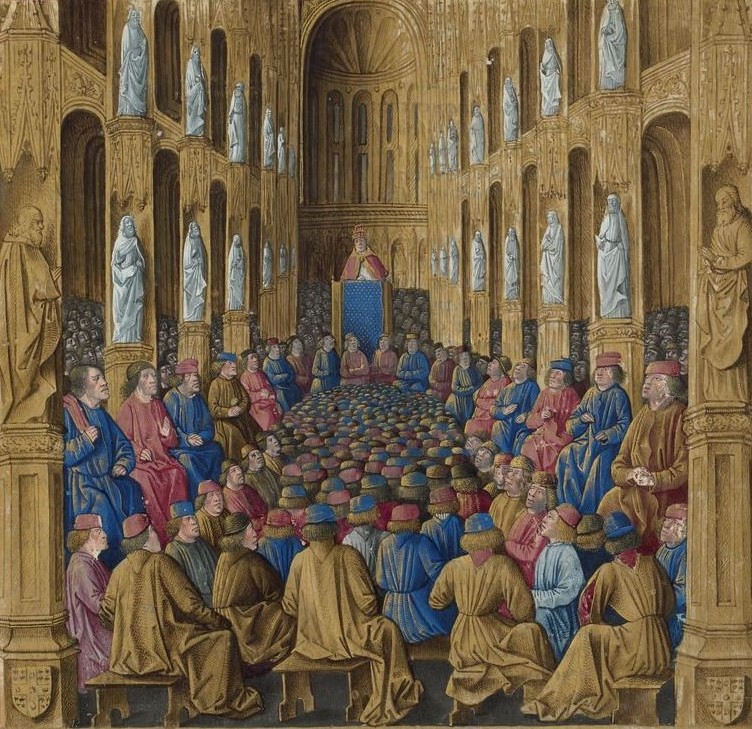
Urban II's call to Christendom |
|
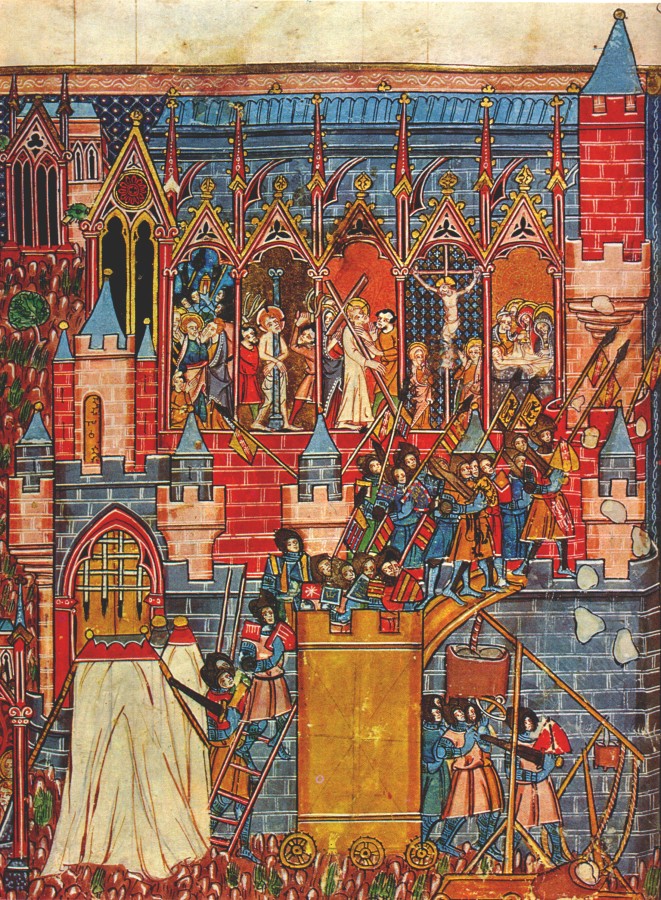
Fall of Jerusalem |
|
|
In 1128 a delegation from Baldwin II, king of Jerusalem, arrived in France. The king had no son to succeed him as defender of the Holy Sepulchre, only four daughters. His messenger requested Louis VII to select from the French nobility a man suitable to marry Baldwin's eldest daughter Melisande, and in due course to succeed as king of Jerusalem. Louis's choice was Fulk, count of Anjou, Maine and Touraine, who accordingly travelled to the East to marry in 1129. Jerusalem was one of four Christian states that had been established in Syria some 30 years earlier, in the aftermath of the First Crusade, a giant armed pilgrimage which had resembled a vast raid, since few of the great concourse of princes, knights and humbler folk who made the journey settled in the East. |
In 1096 a multitude had answered Pope Urban's call to arms in defense of Christianity. Yet although he had preached in Angers itself the ruler of the Angevins had been unmoved. Why, then, was Fulk chosen to be king of Jerusalem, and why was he prepared to quit the native land he had labored hard to expand and consolidate? In 1128 the count of Anjou was about 40 and had already made a pilgrimage to Jerusalem. An eyewitness, Archbishop William of Tyre, described him as '...a ruddy man, like David...and very successful in ruling his own people...an experienced warrior full of patience and wisdom in military affairs.' His main fault was an appallingly bad memory for names and faces. |
The offer of a crown was too good an opportunity to be missed by a mere count, and as Archbishop William indicated, Fulk possessed all the qualifications required for the job. In addition, as a widower he was free to marry again, and could resign his lands confident that they wwere in reliable hands: his youthful but able son Geoffrey Plantagenet was knighted and betrothed to Matilda, the daughter and heiress of Henry I of England -- in time he too stood to inherit a kingdom. All in all 1128 was a good year for the house of Anjou and its spectacular advance had been achieved by astute marriages rather than by war. |
|
|